



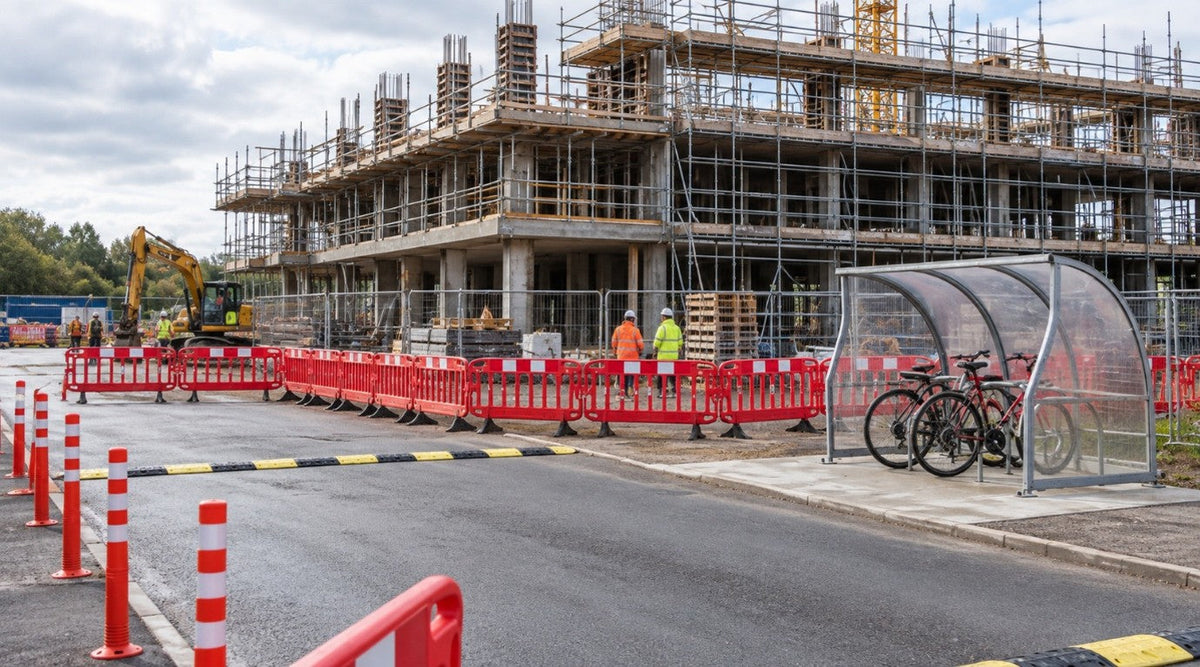
The CIF Construction Safety Campaign takes place from 12 to 23 October 2026. Led by the Construction Industry Federation (CIF), this year’s campaign focuses on Back to Basics, encouraging the construction industry to refocus on the fundamentals of site safety, including safe behaviours, understanding risks, good communication and listening to the people working on site.
At Pittman, safety is at the heart of what we do. That’s why we’re supporting the CIF Construction Safety Campaign and helping to raise awareness around safer construction sites.
Construction sites are busy and constantly changing environments, with workers, contractors, vehicles, machinery and equipment often operating in the same space. Keeping safety at the forefront every day is essential.
By getting the basics right, we can help create safer sites for everyone.

Keep People and Vehicles Separate
As work progresses, pedestrian routes, vehicle movements, restricted areas and access points can change. Safety measures may therefore need to be moved or adapted as different parts of the site become active.
Temporary safety products can be particularly useful in these situations. MultiMax™ Chain Posts can help quickly mark out restricted areas or manage pedestrian movement, while the JSP Portagate Manhole Barrier can help restrict access around manholes and temporary work zones.
For areas requiring a more substantial temporary barrier, the JSP Navigator® Safety Barrier can be used to cordon off work areas and help create clearer boundaries between pedestrians and site activity.
Clear safety signage can support these measures by highlighting hazards, restricted areas and important instructions to workers and visitors.
Whatever solution is used, pedestrian and vehicle routes should remain clearly defined, and safety arrangements should be reviewed as work progresses.

Manage Traffic Around the Site
Construction sites can have regular movement from vans, delivery vehicles and construction machinery. Managing vehicle speeds and clearly defining traffic routes can help make vehicle movements safer and more predictable for people working nearby.
Where controlling vehicle speed is important, the Pittman™ 50mm Speed Bump Kit can help encourage lower speeds around site entrances, pedestrian routes, parking areas and other busy locations.
Traffic cones are a simple way to mark out vehicle routes, highlight hazards and identify areas where access is restricted. They can also be combined with cone bars to quickly create a more clearly defined temporary barrier.
Flexible bollards can also help define traffic routes and guide vehicles through busy sites. Their flexible design allows them to bend if struck and return to position, making them particularly useful in busy areas where vehicles and machinery are regularly moving.

Keep Routes Clear
Safe access, clear exit routes and good housekeeping are important parts of site safety.
Tools, building materials, equipment, cables and hoses can quickly create obstacles, particularly around entrances and frequently used pedestrian routes.
Keeping these areas organised and dealing with potential hazards as they appear can make it easier for workers and visitors to move safely around the site.
Where ground conditions make pedestrian access more difficult, the Spaghetti Site Mat can help create a designated walking area while providing additional grip underfoot.
Where cables need to cross a pedestrian route, the CR2 Pedestrian Cable Cover can help protect cables while providing a safer crossing point for pedestrians.
For areas where vehicles or heavier equipment need to cross cables or hoses, the HR2 Cable Protection Ramp can provide a more robust solution.
Simple Measures. Safer Sites.
Identifying potential hazards before work begins and continuing to review safety as work progresses can make a real difference.
Before starting a task, workers should consider the job, the surrounding area and the equipment being used. Is the area safe? What could go wrong? Are people separated from vehicles and machinery? Are routes clear? Do I have the right equipment and PPE?
If a hazard is identified or something changes during the job, workers should stop, report it and make sure the appropriate controls are in place before continuing.
Taking a few moments to check can help prevent a hazard from becoming an incident.
Good communication, safe behaviour, understanding risks and listening to the people working on site all play a part in creating a safer working environment. Practical safety measures can support this by helping keep people and vehicles separate, routes clear and hazards better managed.
Explore our full range of Construction Site Safety Solutions and find practical products to help make your site safer.
